

How to Safely Dispose of & Recycle Different Types of Light Bulbs
Across communities in British Columbia, more residents are paying attention to how everyday habits affect the environment. Proper light bulbs disposal is a small step that protects local soil and water, reduces waste, and supports more sustainable cities and towns.
Why Proper Light Bulb Disposal Matters
When certain light bulbs are thrown into regular garbage, they can release hazardous substances such as mercury and lead into the environment, where they may contaminate soil and groundwater. This contamination can harm wildlife and pose long‑term health risks for people living in these communities.
Recycling light bulbs also recovers glass, metals, and other materials, which reduces demand for new raw resources and lowers the emissions tied to manufacturing. Whether you live in Vancouver, Victoria, or a smaller community like Osoyoos, these recycling habits help cut landfill use and support local climate and sustainability goals.
Local Rules and Responsibilities in B.C. Communities
BC residents all fall under provincial regulations for handling hazardous and special waste, including some types of light bulbs. These rules are designed to keep mercury and other harmful materials out of landfills and the broader environment.
Ignoring disposal guidelines can lead to penalties for households and businesses when dangerous items are dumped improperly. Checking your municipal or regional district website for current light bulb disposal instructions helps ensure your habits support local environmental programs wherever you are in British Columbia.
How to Identify Different Types of Light Bulbs
Recognising what type of bulb you have is the first step to disposing of it correctly, because each style has different handling and recycling requirements.
Incandescent Bulbs
Incandescent bulbs are the traditional rounded glass bulbs with a metal screw base and a visible filament. They give off warm light but are energy‑hungry, have short lifespans, and generate a lot of heat compared with modern options.
CFL (Compact Fluorescent Lamp) Bulbs
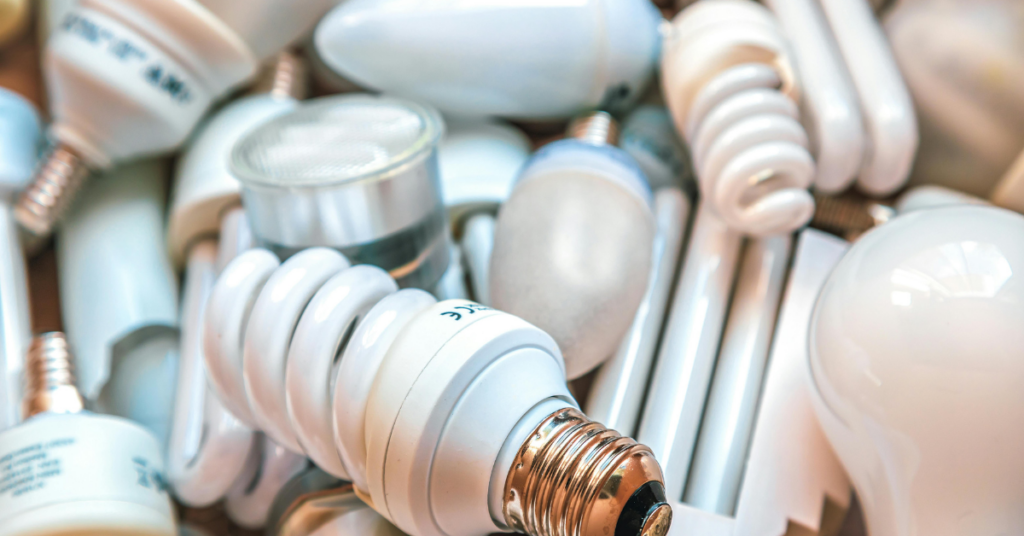
CFL bulbs have a spiral or folded tube attached to a plastic base containing electronics. They are more efficient than incandescent bulbs but contain a small amount of mercury, so they must never be placed in regular garbage or curbside recycling.
LED (Light-Emitting Diode) Bulbs
LED bulbs come in many shapes, including standard A‑shape, globe, and spotlights, and often include a visible heat sink near the base. They are highly energy‑efficient, long‑lasting, and generally have a lower environmental impact across their lifetime.
Fluorescent Tube Lights
Fluorescent tubes are long glass cylinders often used in workshops, offices, stores, and garages across communities like Nanaimo, Kelowna, and Vancouver. They rely on a ballast and contain mercury vapour and phosphor, which means they require careful handling and specialised recycling.
Safe Disposal Methods for Incandescent Bulbs
Incandescent bulbs do not contain mercury, but they typically are not accepted in regular blue‑box recycling. In British Columbia, incandescent bulbs are included in the province‑wide lighting products recycling program managed by Product Care Recycling. Instead of putting incandescent bulbs in your household garbage, you can drop them off for free at participating depots, bottle depots, and retail locations that are part of the Product Care network.
Before you go, place burnt‑out bulbs in a small box or wrap them in paper to prevent breakage during transport. Use Product Care’s online recycling locator to find a convenient drop‑off site near you in communities and include any other accepted bulbs or fixtures in the same trip where allowed.
Recycling Options for CFL Bulbs
Because CFLs contain mercury, they should never go into household garbage or standard curbside recycling in any of the regions listed. Look for local depots, household hazardous waste events, or return‑it style programs that accept CFLs and other mercury‑containing lamps.
Before transporting a CFL, place it back in its original packaging or wrap it in paper and then into a rigid container so it cannot break in your vehicle. If a CFL breaks at home, ventilate the room right away. Collect glass and powder with stiff paper. Use sticky tape to pick up small pieces. Do not use a vacuum to clean it. Seal all waste in a bag or container. Bring it to an appropriate facility for disposal. Follow your municipality’s safety guidance.
Proper Disposal Techniques for LED Bulbs
LED bulbs do not contain mercury but do include electronic components, metals, and circuit boards. Many municipalities and depots in B.C. regions treat LEDs as small electronics and accept them at drop‑off locations rather than in curbside collection.
Check your local waste and recycling directory to see where LEDs can be dropped off in your community. Whenever possible, avoid throwing LEDs into household garbage so their components can be recovered and reused.
Special Handling for Fluorescent Tube Lights
Fluorescent tubes must be handled gently to avoid breakage and mercury release. Carry tubes horizontally with two hands, avoid bending them, and do not stack heavy items on top during transport.
These tubes must go to approved facilities or recycling depots that specifically accept fluorescent light fixtures and tubes. If a tube breaks, ventilate the space, carefully collect the pieces, avoid using a vacuum, seal the debris and cleanup materials in a secure container, and take everything to a suitable drop‑off site in your region.
Finding Recycling Centres and Drop-off Locations
BC residents can use local government websites and online recycling directories to find nearby depots and special waste drop‑off sites. These tools usually list which bulb types are accepted, any associated fees, and packaging requirements.
Community bulletin boards, neighbourhood groups, and local social channels across these regions often share dates for one‑day or seasonal collection events. These events are ideal opportunities to responsibly dispose of multiple bulbs, small electronics, and other hard‑to‑handle items in a single, efficient trip.
How Fresh Start Recycling & Disposal Supports These B.C. Communities
For many homes and businesses, old light bulbs are just one part of a larger clean‑up, renovation, or ongoing waste challenge. This is where Fresh Start Recycling & Disposal becomes a practical partner across British Columbia, with services in Cowichan Bay & Duncan, Kelowna, Nanaimo, Osoyoos, Penticton, Vancouver, and Victoria.
Fresh Start provides fast, eco‑friendly junk removal and flexible bin rentals, with a strong focus on recycling and donation before anything is sent to landfill. Our team handles mixed loads that can include old fixtures, light bulbs (where permitted), electronics, construction debris, and household junk, sorting materials so recyclable and reusable items go to the right facilities.
Whether you are decluttering a home in Nanaimo, Fresh Start can help. Whether you are renovating a property in Kelowna, they can assist. They also help clear out commercial spaces in Vancouver. They support seasonal clean‑ups in Osoyoos as well. Fresh Start can provide a full‑service pickup. They can also provide a convenient bin rental. Our planet‑first approach helps you deal with bulky waste while still supporting responsible recycling and disposal across all of these regions.
Final Thoughts
Proper disposal and recycling of light bulbs may feel like a small task, but across BC communities these choices add up to a healthier environment and less waste. By identifying your bulb type, following local guidelines, and using approved drop‑off locations, you help keep hazardous materials out of landfills and support more sustainable communities. When you face larger clean‑ups or renovations, call Fresh Start Recycling & Disposal. They help with ongoing waste and clutter issues. They offer eco‑conscious junk removal services. They also provide bin rentals for your project. You can clear clutter in a responsible way. You can recycle materials with confidence.